John F Kennedy – Charismatic US President

0

I was overwhelmed often by then US President John F. Kennedy for his charismatic leadership and his eternal love for peace. As the 35th President of the United States, he served from 1961 until his assassination in 1963. Though he was from a politically prominent Irish-American Kennedy family, he was so down to earth and considered an icon of American liberalism. His bravery and heroism well reflected during World War II by rescuing a fellow sailor in the South Pacific.

John - F - Kennedy
John F Kennedy – image by Flickr user U.S. Embassy New Delhi

He was elected as the US President in 1960, in one of the closest elections in history after he served in his home state of Massachusetts as both a member of the House of Representatives and Senate.

His inaugural address on Friday, January 20, 1961 to the Americans and to the world was a fascinating and heart-touching one. The events, just before the inaugural address are rolling into mind.

Heavy snow fell the night before the inauguration, but thoughts about canceling the plans were overruled.

The election of 1960 had been close, and the Democratic Senator from Massachusetts was eager to gather support for his agenda. He attended Holy Trinity Catholic Church in Georgetown that morning before joining President Eisenhower to travel to the Capitol.

The Congress had extended the East Front, and the inaugural platform spanned the new addition. The Chief Justice Earl Warren administered the oath of office.

President John F. Kennedy addressed the audience where the Vice President Johnson, the Speaker, the Chief Justice, President Eisenhower, Vice President Nixon, President Truman, reverend clergy and others were gathered.

His statement in his eloquent voice that “we observe today not a victory of party, but a celebration of freedom, symbolizing an end, as well as a beginning, signifying renewal, as well as change. For I have sworn before you and Almighty God the same solemn oath our forebears prescribed nearly a century and three quarters ago” was so heart touching forever.

He was continuing, “We dare not forget today that we are the heirs of that first revolution. Let the word go forth from this time and place, to friend and foe alike, that the torch has been passed to a new generation of Americans, born in this century, tempered by war, disciplined by a hard and bitter peace, proud of our ancient heritage and unwilling to witness or permit the slow undoing of those human rights to which this Nation has always been committed, and to which we are committed today at home and around the world.”

“Let every nation know, whether it wishes us well or ill, that we shall pay any price, bear any burden, meet any hardship, support any friend, oppose any foe, in order to assure the survival and the success of liberty.”

“To those peoples in the huts and villages across the globe struggling to break the bonds of mass misery, we pledge our best efforts to help them help themselves, for whatever period is required not because the Communists may be doing it, not because we seek their votes, but because it is right. If a free society cannot help the many who are poor, it cannot save the few who are rich.”

“To that world assembly of sovereign states, the United Nations, our last best hope in an age where the instruments of war have far outpaced the instruments of peace, we renew our pledge of support to prevent it from becoming merely a forum for invective to strengthen its shield of the new and the weak and to enlarge the area in which its writ may run.”

“Finally, to those nations who would make themselves our adversary, we offer not a pledge but a request: that both sides begin anew the quest for peace, before the dark powers of destruction unleashed by science engulf all humanity in planned or accidental self-destruction.”

“We dare not tempt them with weakness. For only when our arms are sufficient beyond doubt can we be certain beyond doubt that they will never be employed.”

“But neither can two great and powerful groups of nations take comfort from our present course both sides overburdened by the cost of modern weapons, both rightly alarmed by the steady spread of the deadly atom, yet both racing to alter that uncertain balance of terror that stays the hand of mankind’s final war.”

“So let us begin anew remembering on both sides that civility is not a sign of weakness, and sincerity is always subject to proof. Let us never negotiate out of fear. But let us never fear to negotiate.”

“Let both sides explore what problems unite us instead of belaboring those problems which divide us.”

“Let both sides, for the first time, formulate serious and precise proposals for the inspection and control of arms and bring the absolute power to destroy other nations under the absolute control of all nations.”

“Let both sides seek to invoke the wonders of science instead of its terrors. Together let us explore the stars, conquer the deserts, eradicate disease, tap the ocean depths, and encourage the arts and commerce.”

“Let both sides unite to heed in all corners of the earth the command of Isaiah to ‘undo the heavy burdens … and to let the oppressed go free.”

“And so, my fellow Americans: ask not what your country can do for you ask what you can do for your country.”

“Finally, whether you are citizens of America or citizens of the world, ask of us the same high standards of strength and sacrifice which we ask of you. With a good conscience our only sure reward, with history the final judge of our deeds, let us go forth to lead the land we love, asking His blessing and His help, but knowing that here on earth God’s work must truly be our own.”

The US President who came out with his inaugural address not only for his fellow Americans but for the entire world and faced the major crisis during his presidency, the Bay of Pigs invasion, the Cuban Missile Crisis, the building of the Berlin Wall, the Space Race, early events of the Vietnam War and the American Civil Rights Movement and tried his best to resolve those crisis, was finally assassinated on November 22, 1963 by Lee Harvey Oswald untimely before he put a lasting end to those crisis.

Kennedy’s assassination has left in America and around the world, a traumatic impact for centuries to remember for the world leader who thought for peace and harmony globally.

By: Rajkumar Kanagasingam

Ischemic Heart Disease

Ischemia, the root cause of Ischemic Heart Disease, is a condition in which the blood flow (and thus oxygen) is restricted to a part of the body. Cardiac ischemia is the name for lack of blood flow and oxygen to the heart muscle. Cardiac ischemia happens when an artery becomes narrowed or blocked for a short time, preventing oxygen-rich blood from reaching the heart.


ischemic heart disease - The human heart - Image by Flickr user: Carolina Biological Supply Company
ischemic heart disease – The human heart – Image by Flickr user: Carolina Biological Supply Company


What is ischemic heart disease?

It is the term given to heart problems caused by narrowed heart arteries. When arteries are narrowed, less blood and oxygen reach the heart muscle. This is also called coronary artery disease (CAD) and coronary heart disease. This can ultimately lead to heart attack. Ischemia often causes chest pain or discomfort known as angina pectoris.

Angina pectoris, is more commonly known as angina. This is a chest pain due to ischemma of the heart muscle. The term Angina pectoris comes from the Latin for angina (“infection of the throat”), also derived from Greek “ἀγχόνη ankhonē” or “strangling”, and again from the Latin, “pectus” or “chest”. Angina pectoris translates to “a strangling feeling in the chest”.

silent ischemia

People who experience ischemia without the pain of angina pectoris, have a heart condition known as silent ischemia. They may have a heart attack with no prior warning. People with angina also may have undiagnosed episodes of silent ischemia. One diagnostic tool used today is to perform a 24-hour portable electrocardiogram where the person’s heart under investigation is monitored for a period of time to detect attacks of ischema.

Silent ischemia may also disturb the heart’s rhythm. Abnormal rhythms such as ventricular tachycardia or ventricular fibrillation may interfere with the heart’s pumping ability and can even cause fainting or sudden cardiac death. If ischemia is severe or lasts too long, it can cause a heart attack (myocardial infarction) and can lead to heart tissue death. In most cases, a temporary blood shortage to the heart causes the pain of angina pectoris.

Silent ischemia has no symptoms. Researchers have found that if you have episodes of noticeable chest pain, you may also have episodes of silent ischemia.

Want to know more about Ischemic Heart Disease?

The Britsh Heart Foundation provides information on your Heart Health and is an excellent source of additional reading on all heart related heath problems.

Summer Evening Wheatfield with Setting sun Vincent van Gogh

1
The painting Summer Evening Wheatfield with Setting Sun is one of Vincent van Gogh’s many Wheat Fields works. He painted it in 1888, with previous paintings reflecting the nature’s natural cycle of life he found engrained in the subject matter. van Gogh’s earlier Wheatfields work had progressed from the drab wheat sheaves depicted in his 1885 to the colorful and dramatic scene captured by his increasing talent below. Vincent, had as a young man pursued a religious calling in Isleworth, England, and found wheatfields a metaphor for man’s cycle of life as they are labored by man harnessing nature though the seasonal cycle for a productive end.
Summer Evening Wheatfield
Summer evening wheatfield with setting sun by Vincent van Gogh in 1888
On Display The painting can be seen on display at the Kunstmuseum in Winterthur, switzerland. The Original in an oil on canvas measuring 188 x 231cm. Vincent Willem Van Gogh Born: March 30, 1853 in Zundert, The Netherlands. Died: July 29, 1890 in Auvers-sur-Oise, France. Artistic Style: Post-Impressionism.  

The Tree Frog: An amphibian climber of colour, poison and intrigue

red-eyed-tree-frog
Red Eyed Tree Frog

Tree frogs are one of the most fascinating and beautifully colored creatures in the world. They live in many different climates throughout the world and are typically found in tall trees or other plant life. Tree frogs are classified by their ability to climb due to the suction cups on each of their feet. Miraculously, a majority of these frogs are classified as unthreatened and have surprisingly high population numbers. However, this is not always the case.

Red Eyed Tree Frog

These wonderfully colored amphibians are known to spend nearly their entire lifespan without ever touching the ground except for mating. These frogs are not poisonous and depend on a special behavior to protect themselves. Their brilliantly colored red eyes and stripped blue sides obviously do not help to camouflage them, but during daylight they remain completely still, tuck in their legs, and close their eyes so that potential predators will not notice them against the green foliage they call home. They are found in tropical forests in Central America and Southern Mexico.

Japanese Tree Frog
Japanese Tree Frog – Image by Flickr user Autan

Japanese Tree Frog

This species of tree frog is common throughout Japan, Korea, and China. In fact, the species can be found as far North as Mongolia and Russia. These frogs can often be found in rice paddies hiding amongst the foliage. They also enjoy broadleaf forests in areas near creeks and streams and ponds. This is a very hardy and adaptable creature and will sometimes be found living quite contently in large cities, provided a reliable water source is nearby.

Pacific Tree Frog
Pacific Tree Frog – image by Flickr user aehack

Pacific Tree Frog

This frog from the Western coast of The United States comes in a variety of colors, including reds, greens, browns, tan, cream, and black. However, most are greenish or brownish because they aid in camouflaging them from predators. They are excellent jumpers and climbers due to their long legs and the sticky pads on their feet. This frog is perfectly happy both at sea level and in high altitudes, sometimes as much as 10,000 feet.

Poison Dart Frog - image by Flickr user MoleSon²
Poison Dart Frog – image by Flickr user MoleSon²

Poison Dart Frogs

These frogs display some of the most vibrant and impressive colors of any frog species. Although this is visually appealing to humans, it serves as a warning to predators. The indigenous peoples living in close proximity to these lovely creatures know the lethality of their poisonous alkali secretions and use them on their darts, hence the name, poison dart frog. However, only some of the roughly 151 species of poison dart frogs can be considered tree frogs. Many are ground dwellers and some do not stray far from ponds or streams. They are found in Central and South America, namely Brazil, and are usually diurnal, meaning they are awake during the day. Due to deforestation and destruction of the Amazon rainforest, these frogs are considered an endangered species.

Emerald Glass Frog

This truly beautiful species of tree frog is found predominantly in Costa Rica, but also in Panama, Columbia, and Ecuador. Glass frogs are typically very small and this species generally does not exceed 31 millimeters. They get their name from their translucent bellies. The digestive track and other internal organs can be easily seen through the skin. Despite their tiny delicate bodies, these frogs are highly territorial and have been known to fight each other in wrestling matches that can last a long time. When mating, the males will call to attract a female from a perch high above a stream or river. The female will join the male at his perch to mate and will lay eggs hanging above the stream. Once the eggs hatch about two weeks later, they fall into the stream as tadpoles.

Do you want to publish an article on Interesting Everything? Contribute Here

Glencoe Scotland the Highlands highlight

Glencoe Scotland
Buachaille Etive Mor Glencoe Scotland at sunrise – image by Ben Spencer of BenSpencerPhotogrphy.com


Glencoe, Scotland – things to see and do

Discover Glencoe, the most renowned Highlands Glen. Just a short drive from central Scotland, Glencoe attracts millions of visitors annually, with stunning scenery, incredible history and thrilling activities to enjoy in its beautiful surrounds. From the breath taking peaks and waterfalls, to the warm and friendly hospitality of Glencoe Village, you’ll find a place that is steeped in charm and magic. Check out our top tips on this beautiful and unique part of Scotland, to help you make the most of your experience.

Captivating backdrops

Upon arrival, you might be struck by how incredibly cinematic the surroundings feel. Awe-inspiring peaks greet you, topped with mist and mystery at the start of the day, while waters tumble down in a series of waterfalls and small rivers. It’s no surprise then, that Glencoe’s attracted the attentions of film makers for years – most notably, 007’s latest outing in Skyfall, as well as the Harry Potter series, all took advantage of its unique character.

Make your own memories of Glencoe as you explore for yourself its mountains, lochs and rushing rivers. Uncover its rich natural history, present all year round – from the red deer often spotted wandering around in winter, to the scores of different bird species that come all through spring and summer.

Glencoe Scotland Landscape
Glencoe Scotland Landscape – image Ben Spencer


Challenges to thrill

Take in Glencoe in your own style. Choose between a host of various adrenalin-packed extreme sports, including skiing, mountaineering, biking and river rafting. Boasting Scotland’s oldest ski school, both beginners and long-time pros can enjoy the host of activities on offer. Purpose made bike tracks let you criss-cross the country, and annual races attract thousands of visitors wanting to hurtle across the glens at breakneck speeds.

For a more serene experience, make the most of the scenery with a relaxing mountain walk. With routes tailored to different levels, you can take it at your pace, from the invigorating walk to the historic Signal Rock, to gentler walks across the flats and woodlands. Don’t forget to catch the majestic Loch Achtriochtan, for some truly memorable scenes, and take in the local wildlife – Glencoe is a birdwatcher’s paradise.

A taste of Scotland

Scotland’s customary warmth and hospitality is particularly special at Glencoe, as the local village and surrounding area offers up a range of goodies for you. Enjoy the many distinctive tastes of Scotland, from traditional Scottish baked treats in the character-filled tea rooms across Glencoe, as well as restaurants boasting delicious local meat, game and seafood. Many of the charming local pubs will let you experience real ales and Scottish whiskey, as well as the friendly local atmosphere.

Take away a bit of Glencoe with you, with a taste of the local shopping. You won’t find a generic looking High Street here, but instead, you can discover the delights of the local arts and crafts, with talented artists capturing the natural beauty in photography, paintings and ceramics. Wool shops specialise in luxurious locally made wool and cashmere wares, while you’ll also find a host of edible treats to take home for friends and family.

This article was a paid contribution by Miriam P. You can find her on the People Per Hour website. Editor Matthew Richmond. Photographic editor Ben Spencer.

glencoeglencoe


Hadrian’s Wall a legacy of Roman Britain

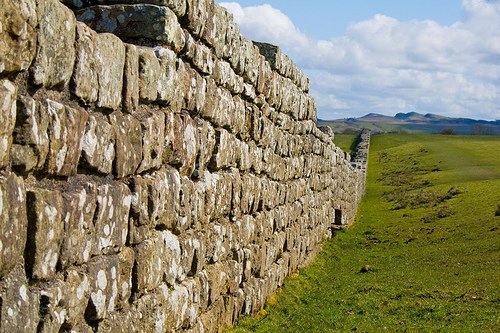
Hadrian's wall
Hadrian’s wall in North England – Image by Flickr user Andrew Cheal Photography


As one of the most sought out tourist attractions in the UK, Hadrian’s Wall dates back to the reign of the Roman Emperor it was built and named for, in AD 122. Taking only eight years to build and come into use, the wall stretches 73 miles across the landscape of Northern England, with the majority residing in Northumberland.

In the original days and years of its use soldiers from all over the Roman Empire patrolled Hadrian’s Wall. Although it was essentially built as a defensive fortification for protection there have always been conflicting views on just how much of a threat the people of Northern Britain were at the time. With the discovery of many gatehouses within the wall, and roads leading through the wall; it is now believed the wall also served as a means of revenue for this far flung annex of the roman empire by extracting taxes from traders traveling north and south.

Hadrian’s Wall became a UNESCO World Heritage Site in 1987 and one local man must take a lot of the credit for this. John Clayton was a Lawyer turned Town Clerk for Newcastle in the 1830’s. He was appalled that parts of the wall were being used extensively to build new roads, and that the decline of the walls structure was gaining speed. He bought several large parts of Hadrian’s Wall and paid for them to be reconstructed and maintained in order to keep part of the UK’s history for generations to come.


Hadrian's Wall and Fort by Flickr user jacqueline.poggi
Hadrian’s Wall and Fort by Flickr user jacqueline.poggi


But this is not just a wall, with 8 major excavated forts and several others, Hadrian’s Wall offers a wealth of education and history to inspire and excite both young and old visitors. Many of the unbroken parts are located on country walks which offer spectacular views that remain almost unchanged from it’s early days and there are archeological digs in session, mile castles and even temples to explore. In the summertime there are also full costume battles to take you back to the very old days and show you a piece of history.

The Hadrian’s Cycleway, National Cycle Route 72 is the track for anyone who wishes to walk or cycle along the route of the wall. However, you can also drive the majority of the walls path though Northern England in your car or take the Hadrian’s Wall Bus Service, which stops at all major Roman Sites of interest. There are a selection of pubs and a plethora of accommodation options for your stay all along the wall cycle path, so you are sure to find something to suit your budget and needs.

This article was a paid contribution by Emma P. a copywriter, creative writer, and PA.  You can find Emma on the People Per Hour website. Editor Matthew Richmond.

The Royal Mail Underground Railway

The Royal Mail found that traffic in London was a problem even before automobiles were widely used and available. In one of the busiest cities in the world getting from point “A” to point “B” has been a problem for over 100 years. However, London is a pioneer when it comes to regulating traffic. For instance, in 1868 the city instituted the very first traffic signal to provide safe passage for pedestrians at the intersection of George and Bridge streets near Parliament. Even though the car was not yet invented, the city was choked with horse-drawn carriages. City planners have tried to tackle the congestion in London to ensure the safety and efficiency of transportation for drivers, bikers, and pedestrians for years. However, one of the most fascinating feats of efficient transport carried no passengers and had no drivers.
Royal Mail Underground Railway
Royal Mail Underground Railway. Image by Flickr user Martin Deutsch
The London Post Office Railway carried mail from the Head District Sorting offices in Padington to the Eastern sorting office in Whitechapel. The railway operated from February 1927 until May 2003 and carried mail to nine different sorting facilities along its route, two of them being main sorting centers for the city. The six and a half mile (10.5 km) long route is 70 feet (21 meters) below the streets of London and could travel the entire length, making all stops, in about 26 minutes. It ran 19 hours a day, 286 days a year and once carried roughly 4 million letters per day, but as years passed and sorting facilities were relocated the railway began to see less and less usage. Several extensions were proposed to the line that would have added eleven new stops to the route. Although the extensions were started during the initial construction of the line, the lines were never fully built. They plans remained on the books for years, but the costs of building these new stops were never able to outweigh the potential benefits. This solution for transporting mail to sorting facilities is one of a kind and remained in use for over 75 years. Bypassing the congested streets of London allowed for mail to be transported without delay. However, a Royal Mail press release in April 2003 announced that the line would be closed. Royal Mail explained that using the railway was roughly five times more expensive than road transport, at 1.2 million British Pounds a day. New technologies have contributed to a large decline of usage for traditional mail. Since just about everyone is using email, the need to transport letters has fallen considerably. Additionally, competition between state mail delivery and private business has further pushed Royal Mail into a growing deficit. And so on the 30th of May 2003 the underground railway ceased all operations. However, three of the railway trains were removed and preserved at the British Postal Museum. This unique solution to the over congested streets of London was adopted to avoid unexpected and unacceptable delays, but due to excessive losses from decreased use of Royal Mail services, the railway became to expensive to maintain. Although the track had nine stops along its route, it was only delivering to three of them when it closed. Sorting facilities were relocated and would need new tunnels and tracks to be built in order to continue using the rail. Although the railway was removed from active service, the lines still exist and are reportedly in surprisingly good condition. Despite some degradation from age and disuse, the line is still intact. It is unlikely that the system will ever be adopted again in the near future, but if the congested streets of London ever prove too slow for mail delivery, maybe the railway will return to service. This article was a paid contribution by Matthew R, a Freelance Writer based in Philadelphia, USA. He can be found on the People Per Hour website.

Ten crops that feed the world

Agriculture has been feeding the world for 20,000 years, but in all that time there have only been a handful of crops that have feed the majority of the world’s population. Whether those crops are consumed directly or as feed for animals, the world’s population is reliant on these food parcels from nature. We farm and consume fast amounts of these roots, fruits, grains, and pulses.

corn maze crop being examined
Corn (Maize) – Image flickr user “CIAT International Center for Tropical Agriculture”

Maize or as it is more commonly known, Corn, is a crop that is is almost every food product you purchase in some form or other. Maize was originally cultivated in the prehistoric era by indigenous tribes of what we now refer to as Central America. Maize was brought to Europe in the late 1400’s.  From the Americas and Europe maize cultivation spread around the world as the robust plant can produce a solid crop in many climates. Yellow Maize, Sweet Corn is mainly grown for human consumption, whilst white maize is grown for feeding livestock. The USA is the worlds largest producer of maize followed by China, and then Brazil.  Maize has become a major biofuel crop, with the price of maize now tracking it’s fluctuations with the price of oil.

Maize is used in the production of thousands of non-food products including; Adhesives, Aluminium, Batteries, Cosmetics, Explosives, Ink, Insecticides, Insulation, Cardboard, Carpets, Wallpaper, and Toothpaste.

One bushel of maize refined into corn syrup can sweeten around 400 cans of coke. You can find corn derivatives, it’s sugars, and starches in potato crisps (potato chips for our North American readers), chewing gum, ice cream, peanut butter, vitamins, fruit juice (sweetened), yogurt, bread, salad dressings. Corn Starch, or corn flour is used as a thickening agent for sauces, stews and soups. Nutrient content of the maize crop per 100 grams is 3.2g protein, 1.18g fat, 19g carbohydrates, and 2.7g of fibre.

potatoes cupped in hands after harvesting
Potatoes – image by flickr user “Dr. Hemmert”

Potatoes come from South America originally and after first being domesticated around 2500 BC they were transported to Europe in 1536 by the Spanish.  They come in many verities, but those that are most adaptable to different types of cooking tend to be the main commodity crops we see in our supermarkets.  The humble potato is the worlds largest food crop following rice, wheat and maize. In 2008 there were 314 million tonnes produced worldwide; Now thats a lot of french fries! China is the words biggest producer of potatoes. Sometimes a society can become so reliant on the potato that an agricultural disaster can quickly become an ecological and sociological disaster resulting in mass famine and migration. The great potato famine in Ireland between 1845 and 1852 killed 1 million.  As a result of the famine a million Irish emigrated to find food and work. Ironically the potato became more expensive than gold in the klondike for a short period in 1897 as a server food shortage push up prices. On a lighter note the Incas measured time by how long it took potatoes to cook. Nutrient content of the potato crop per 100 grams is 2g protein, 0.09g fat, 17g carbohydrates, and 2.2g of fibre.

sweet potatoes in a wooden basket
Sweet Potatoes – image by flickr user “khawkins04”

Sweet Potatoes are a relatively modern import to the UK, having being popular in North America for centuries. Sweet potatoes have been dated back to 8,000 BC in South America. The first Europeans to eat Sweet  Potatoes were members of the 1492 Columbus expedition. George Washington Carver, an American botanist named after the first US president, planted them on his farm in Virginia. Sweet Potatoes are roots, unlike Potatoes which are tubers (underground stems). A Taiwanese company has made fuel from sweet potatoes. Nutrient content of the Sweet Potato crop per 100 grams is 1.6g protein, 0.05g fat, 20g carbohydrates, and 3g of fibre.

an image showing yams from the Dioscorea Genus
Yams (Genus Dioscorea) on the right of the image – by flickr user “aroid”

Yams are a stable food in West Africa and the Caribbean.  In North America they are sometimes mistakenly called Sweet Potatoes.  Whilst Sweet Potatoes are similar they do not come from the same genus of plants. Originally cultivated in Asia in 8,000 BC, yams are now a staple diet in Africa and the Caribbean. There are over 150 verities of cultivated Yam. Yams have been used to make steroid drugs and contraceptives. Mexico had a thriving industry in producing Yams for drug production. Nutrient content of the Yam crop per 100 grams is 1.5g protein, 0.17g fat, 28g carbohydrates, and 4.1g of fibre.

cassava roots shown sliced intersection
Cassava roots – image by flickr user “CIAT International Center for Tropical Agriculture”

Cassava is a native of South America that is now more commonly associated with African cooking. Nigeria is the worlds largest producer of Cassava. The tuberous root forms the staple diet to 500 million people. It’s a great source of Carbohydrate and weathers extremely well in drought ridden soils. Tapioca, another name for this food stuff is obtained by drying the root.  This plant needs to be well prepared before consumption as it contains a natural form of cyanide. Nutrient content of the Cassava crop per 100 grams is 1.4g protein, 0.28g fat, 38g carbohydrates, and 1.8g of fibre.

soybeans growing in a field
Soybean crop growing – image flickr user ” amicor”

Soybeans are a species of legume that originate from Asia. The soybean is an amazing vegetable source of protein used in animal feeds and increasingly ready meals. In protein terms, soybeans are one of the highest yielding crops commercially grown. The beans are oftern processed into a textured blocks that are used in cooking to replace meat products. Tofu and soy milk are popular in the western world, and fermented soy beans have been the condiment of choice, in chinese take aways in the form of soy sauce.

Soybean oil is the most widely used vegetable oil. It is found in margarine’s, salad dressings, canned foods, sauces, bakery goods, and processed fried foods. Soy protein contains all 8 essential amino acids and is considered a complete protein. During the American Civil War, soybeans were used in place of coffee because real coffee was scarce. Oil produced from the plant is used in many non-food industrial applications. Soybean oil provides an environmentally friendly biofuel for diesel engines. There is a worldwide debate surrounding the production of biofuel as more land is taken away from food production at a time when the world is falling short of food. Soy ink is used to print newspapers and textbooks. Soybean is used in plastics, wood adhesives and textiles, candles, crayons, cleaning products and hair-care products.

The worlds largest producer and consumer of soybeans is not china, as you might expect, but the United States. They were first brought to the US from China by sailors on board a Yankee clipper, using the beans as a cheep source of ballast. Nutrient content of the soybean crop per 100 grams is 13g protein, 6.8g fat, 11g carbohydrates, and 4.2g of fibre.

sorghum being carried after harvest
Sorghum crop being carried after harvest – image by flickr user ” sidelife”

Sorghum originated in Egypt between 6,000 and 4,000 years ago. Today sorghum is Africa’s second most important cereal crop. Sorghum (also known as Milo) is a coarse, upright growing grass. It is capable of being grown in a wide variety of soils and climates, making it a very useful crop in arid and drought conditions. Sorghum ranks fifth among the most important cereal crops of the world, after wheat, rice, maize, and barley in both total area planted and production.

Sorghum’s major use in the US is as livestock feed. In Africa it is mainly consumed by the human population. Benjamin Franklin is often associated with the introduction of sorghum to the United States. Since 1976 Wewoka in Oklahoma has been holding a sorghum festival every october that is attend by 40,000 people.  In years where sugar has been expensive, sorghum was often used as a sweetener. Sorghum syrup is a traditional breakfast accompaniment in southern Appalachia, a region of the United States that stretches from North Georgia to west Virginia.

With the increased diagnoses of Celiac disease (an auto immune disease in which the lining of the gut reacts to gluten, a component of wheat), sorghum is becoming an increasingly important food crop in Europe and North America. Sorghum can be made into bread, porridge, and beer. Sweet Sorghum is the pure juice extracted from sorghum cane. This juice is then evaporated to form syrup and other forms of sugars that can be found in a variety of products. Sorghum is a good source of iron, calcium and potassium. Nutrient content of the Sorghum crop per 100 grams is 11.3g protein, 3.3g fat, 75g carbohydrates, and 6.3g of fibre.

plantain growing
Plantain crop growing

Plantain a cousin of the banana is a major food crop in equatorial Africa and Andean regions. The plantain crop can be grown and harvested all year round which means it does not need to be stored. Plantains are harder and firmer than there sweeter tasting cousins and tend to be used as a savoury component in meals. Most often plantain are prepared as a cooked food stuff and are a very good source of fibber and potassium. As a food staple the plantain ranks tenth in the world. Often associated with Africa and the Caribbean, plantain actually originated from South East Asia. Uganda is now the worlds top producer of plantain. Plantains are used to produce Chapo Juice, an alcoholic drink in Peru. Interestingly unlike the other nine main crops that feed the world, the plantain can not produce seeds and has to be propagated by cuttings taken from the plant. Nutrient content of the plantain crop per 100 grams is 1.3g protein, 0.37g fat, 32g carbohydrates, and 2.3g of fibre.

Wheat Spikes
Wheat spikes – Image flickr user “Dag Endresen”

Wheat is the worlds most farmed crop by surface area. Wheat is perhaps associated with farming more than any other crop, it is quite literally our daily bread. The cultivation of wheat for crops was first thought to be in an area that is now modern day Iraq in the Tigris river valley. The word Cereal, comes from the name of a Roman goddess, Ceres, who it was believed protected the wheat crop. It was not until the late 1700’s that wheat was planted in the US. Today Wheat makes up three quarters of the US grain harvest. Wheat is the largest source of vegetable protein in the world. The ability for early farmers to mass produce wheat crops and it’s ease of storage made civilisations early cites possible. Before the wheat crop, more labour was needed for farming, leaving little time to build cites and requiring more of the population to work in agriculture. Nutrient content of the wheat crop per 100 grams is 13.7g protein, 2.47g fat, 71g carbohydrates, and 10.7g of fibre.

rice crop in paddy fields
Rice crop growing in paddy fields – image by flickr user “mac.rj”

Rice is the stable of any asian diet, and is grown on every continent, with the exception of Antarctica. Rice feeds half of the worlds population and is the second most important world crop after maize. However as the use for maize diversifies, Rice has over taken maize as the worlds most important food crop in calorific terms. There are over 40,000 varieties of rice. Rice is a symbol of life and fertility, which is why rice is traditionally thrown at weddings. Rice cultivation can be dated back to 5000 BC. There is a debate about the original source of rice, some believe it is China, and some believe it is India. Rice is the staple food of Japan, where they tend to go for the smaller grain varieties. China is the worlds largest producer of rice.

Rice can be grown in any normal field, however as rice can germinate and grow out from under water, Paddy fields are used to reduce the labour required to remove weeds from the crop.  Weeds can not grow in the flooded fields.  The paddy fields also illuminate the vermin, that would otherwise feed on the young rice shoots.

Unlike wheat, rice does not contain gluten, and is therefore suitable for gluten free diets. Nutrient content of the rice crop per 100 grams is 7.1g protein, 0.66g fat, 80g carbohydrates, and 1.3g of fibre.

So without these ten crops that feed the world we would be in real trouble today. With the need to feed the worlds population, pre-agricultal methods of subsistence, namely “hunting and gathering” would simply not support the 8 billion people that need breakfast, lunch and dinner eveyday.


Snakes are mother natures colour pallet

Green Tree Python
Green Tree Python – Image by flickr user LongitudeLatitude

Snakes are some of nature’s most colourful creatures. Feared by many, including myself, they are also beautiful adaptations of the world’s natural colour scheme. Their colours come from millions of years of evolution and adaption to their environment. There are two primary reasons for a snake’s colour. Some use colour for camouflage, and some use colour to warn others that they are present

Green Snakes

Green Tree Python (Morelia viridis) – The young snakes are vivid yellow. As they mature into adulthood they gain their vivid green colouring. In the wild they can be found in the rain forests of New Guinea and the northern tip of Australia. Green tree pythons spend almost all of their lives in the branches and only slide down the trunks to move between trees.

Other green snakes of note are the Natal green snake, smooth green snake, Cyclophiops major greater green snake, Green vine snake, emerald tree boa, and the rough green snake.


Red Snakes

corn snakes
Corn Snakes – image by flickr user Department of Sustainability & Environment


Corn Snakes, a species of rat snake, inhabit North America. They feed on rates and mice, killing their pray by constriction. They live for six to eight years in the wild, but in captivity they can live three times longer than that. They are often kept as pets due to their docile and non-venomous nature. The name corn snake comes from southern farms in the United States where they were found eating rodents that had in turn been eating corn and wheat crops stored in barns.

Other red snakes of note are the Milk Snake and King Snake.


Blue Snakes

Blue Racer snake
Blue Racer snake – image by flickr user j / f / photos’


The blue racer snake is a native of a small region of North America (Ontario, Michigan, Ohio, Minnesota, Wisconsin, Illinois) and is know for it’s aggressive behaviour. This behaviour can show it’s self as rattling. The sound is often confused with that of the rattle snake.

Other blue snakes of note are the Texas indigo snake, blue green tree snake, Turtle-headed Sea Snake, Blue Coral Snake, Blue-lipped Sea Krait (Laticauda laticaudata), Blue Axanthic plains garter snake, and the Iridescent Shieldtail.


Yellow snakes

yellow python snake
Yellow Python snake – Image by flickr user torkildr


Yellow pythons are actually Burmese pythons in their albino forms. Burmese pythons were originally a species from Southern and Southeast Asia. In recent years they have become an ecological threat to the indigenous wildlife of the Florida everglades after pet snakes have escaped.

Other yellow snakes of note are the yellow rat snake, polls yellow snake, mcgregor’s pit viper, yellow bellied sea snake, and the Eyelash Viper (Bothriechis schlegelii).


White Snakes

albino california king snake
albino california king snake – Image flickr user TheChanel


It seems odd that there should be white snakes. White is not generally thought to be threatening, and seemingly does not help with camouflage. There are however white snakes, Albeinos. These snakes are not normally white, but a have genetic mutation that causes their lack of colour.

Team GB’s 43 Gold Medalists

0
Great Britain and Northern Ireland (Team GB) won 29 Gold medals at this summer’s London 2012 Olympics. It took the dedication, sacrifice and hard work of 43 individual athletes to achieve.  
Team GB - The 42 olympic gold medalists
Team GB – The 43 olympic gold medalists
  Athletics gold medals Greg Rutherford – Long Jump Jessica Ennis – heptathlon Alister Brownlee – Triathlon Mo Farah – 5000m & 10,000m Tennis gold medal Andy Murray – Singles – (Also a silver medal in mixed doubles) Equestrian gold medals Charlotte Dujardin – Individual & Team Laura Bechtolsheimer – team dressage (also a bronze medal in individual dressage) Scott Brash – team jumping Peter Charles – team jumping Carl Hester – team dressage Ben Maher – Jumping Nick Skelton – Team Jumping Cycling gold medals Laura Trott – Omnium & Team Pursuit Victoria Pendleton – Keirin (also a silver medal in the sprint) Ed Clancy – team pursuit (also bronze medal in the omnium) Bradley Wiggins – Time Trial Peter Kennaugh – Team Pursuit Philip Hinds – Team Sprit Joanna Rowsell – Team Pursuit Geraint Thomas – Team Pursuit Steven Burke – team pursuit Dani King – team pursuit Chris Hoy – Keirin & Team Sprint Jason Kenny – Sprint & Team Sprint Shooting gold medal Peter Wilson – Double Trap boxing gold medals Nicola Adams – Flyweight Luke Campbell – Bantamweight Anthony Joshua – Super Heavyweight Taekwondo gold medals Jade Jones – Taekwondo gold medal – 57kg Canoe gold medals Tim Baillie – Slalom Double C2 Etienne Stott – Slalom Double C2 Ed McKeever – Sprint Kayak Single K1 200m Rowing gold medals Helen Glover – pair Katherine Grainger – Double Sculls Alex Gregory – Men’s Four Andrew Triggs Hodge – Men’s Four Katherine Copeland – Lightweight Double Sculls Tom James – Men’s Four Peter Reed – Men’s Four Sophie Hosking – Lightweight Double Sculls Heather Stanning – Pair Anna Watkins – Double Sculls Sailing gold medal Ben Ainslie – Sailing – Finn