LATEST ARTICLES

The Berlin Wall

The Berlin Wall: A Symbol of Division and Unity

A black and white image of artwork on a section of The Berlin Wall
Artists have covered sections of The Berlin Wall with artwork in modern times, making them tourist attractions. Photo credit David Lally under License: CC0 Public Domain

The Berlin Wall, erected in 1961 and dismantled in 1989, stands as one of the most significant symbols of the Cold War. It represented not only the physical division of East and West Berlin but also the ideological chasm between communism and democracy. The Wall’s construction and eventual fall profoundly influenced Germany and the broader geopolitical landscape of Europe.

Historical Context of The Berlin Wall

In the aftermath of World War II, Germany was divided into four occupation zones, controlled by the United States, the United Kingdom, France, and the Soviet Union. This division mirrored the growing tensions between the Eastern Bloc and the Western Allies, leading to the emergence of two distinct German states: the Federal Republic of Germany (West Germany) and the German Democratic Republic (East Germany).

By the late 1950s, East Germany was experiencing significant emigration, with many citizens fleeing to the West in search of better economic opportunities and personal freedoms. This exodus posed a considerable threat to the stability of the East German regime, prompting the government to take drastic measures.

The Construction of the Wall

On August 13, 1961, the East German government, backed by the Soviet Union, constructed the Berlin Wall overnight. Initially a barbed-wire fence, it quickly evolved into a formidable concrete barrier, complete with guard towers, anti-vehicle trenches, and a “death strip” designed to deter escape attempts. The Wall effectively cut off East Berlin from West Berlin, dividing families and friends and restricting the movement of millions.

Life Under the Wall

The existence of the Berlin Wall had profound implications for life in both East and West Berlin. In East Berlin, the government tightly controlled information and suppressed dissent. Citizens faced surveillance, imprisonment, and violence if they opposed the regime. Meanwhile, West Berlin became a vibrant symbol of freedom and prosperity, attracting artists, intellectuals, and tourists.

Attempts to cross the Wall were perilous, with many risking their lives in the hope of reaching the West. Some succeeded, while others faced tragic fates. Over the years, hundreds of people died trying to escape, cementing the Wall’s status as a grim reminder of the lengths to which individuals would go for freedom.

The Fall of the Wall

The late 1980s marked a period of significant political change in Eastern Europe. With the rise of reformist movements and increasing pressure from the populace, the East German government found it increasingly difficult to maintain control. On November 9, 1989, amidst growing protests and international pressure, the government announced that East Germans would be allowed to cross the border freely. This announcement led to a spontaneous celebration as thousands flocked to the Wall, overwhelming border guards who eventually opened the gates.

The fall of the Berlin Wall was a watershed moment, symbolizing the end of the Cold War and the beginning of German reunification. It sparked a wave of democratic movements across Eastern Europe, leading to the collapse of communist regimes in several countries.

Legacy of The Berlin Wall

Today, the Berlin Wall is remembered not only as a barrier that divided a city and a nation but also as a symbol of hope and resilience. Various memorials and remnants of the Wall can be found throughout Berlin, serving as a reminder of the struggles for freedom and the importance of unity.

The legacy of the Wall continues to influence contemporary discussions about democracy, human rights, and the importance of understanding history. As we reflect on the lessons of the Berlin Wall, we are reminded of the enduring human spirit in the quest for freedom and unity.

You can visit The Berlin Wall Museum to look over the wall and wonder around exhibits dedicated to history of the wall.

The Wall in Popular Culture

The historical and political influence of the wall can be seen in many films with the espionage genre depicting the dividing structure in multiple cinematic productions.

  • The Lives of Others (2006) Set in East Berlin during and after the fall of the wall, this movie offers a look at life behind the wall. 
  • Wings of Desire This film features a studio reconstruction of the Berlin Wall, as well as many of the city’s landmarks. 
  • Run Lola Run (1998) In this film, the main character runs through a post-reunification Berlin in three alternative realities. 
  • Goodbye Lenin! (2003) This film takes an Eastern German perspective on the fall of the wall and the difficulties East Germans faced in adapting to Western capitalism. 
  • The Promise This film is about two young lovers who are separated when the Berlin Wall goes up and spend 28 years trying to reunite. 
  • Night Crossing (1982) Also known as With the Wind to the West, this Disney film portrays the escape of East Germans over the wall in a hot air balloon. 
  • Balloon (2018) This film also portrays the escape of East Germans over the wall in a hot air balloon. 
  • Funeral in Berlin (1966) The opening sequence of this film shows a person being smuggled over the wall using a crane. 

Conclusion

The Berlin Wall serves as a poignant reminder of the ideological battles of the 20th century and the enduring struggle for human rights. Its rise and fall encapsulate the complexities of the Cold War era, illustrating the power of collective action and the unyielding desire for freedom. As we move forward, the lessons learned from this tumultuous period remain relevant, reminding us of the importance of unity in the face of division.

Land’s End to John O’Groats: A 1000 Mile Wheelchair Triumph

Peter Smorthit’s Incredible Journey: Land’s End to John O’Groats

A man in a wheelchair pulling a small trailer on a road.
Peter Smorthit on his Land’s End to John O’Groats (LEJOG) wheelchair push.

Meet Peter Smorthit, the first person to push a wheelchair unsupported from Land’s End to John O’Groats, the two extreme points of mainland Britain. Peter, 32 from London in the UK, completed the remarkable achievement in just 34 days. It took him on a 1041 mile journey of both physical endurance and personal determination.

Smorthit completed the entire route, considered the ultimate endurance test for hikers and cyclists as he pushed his wheelchair and pulled a trailer full of camping gear and supplies, doing it all without support. He met up with a few friends along the route, but they couldn’t push him, so he could prove to himself and the world that he could do it unsupported. Other people have completed the distance in wheelchairs before, but they’ve either had someone push them for part or all of the journey or they used motorized adaptations. Peter was the first person to do it unsupported and using manual arm power only.

The journey is demanding for anyone, requiring traversing diverse terrains, from rolling hills and rugged landscapes in the West Country to the more remote and challenging roads in Scotland. The route passes through small villages, towns, and large cities, but also cuts through some of the UK’s most remote and sparsely populated areas.

The shortest cycling route between Land’s End and John O’Groats is roughly 874 miles. However, Peter had to avoid certain roads and paths, increasing his total distance to over 1,000 miles.

A true athlete and fundraising hero

Peter is a passionate para-athlete. He has completed 214 marathons, 153 ultramarathons, and many 24-hour rides. Peter has raised millions of pounds for charity since 2011. Supporting those charities that help disabled people such as Canine Partners, Back Up, LimbPower and Dog AID.

Peter Smorthit’s motivation for taking on this extraordinary challenge was not just personal, but also driven by a desire to raise awareness and inspire others. Driven by his own experiences with mobility challenges, Peter passionately sought to showcase the possibilities despite physical limitations. His journey highlighted the strength of the human spirit and the ability to overcome obstacles, both physical and mental.

A collapse of the scaffolding Peter was working on severed his spinal cord, leaving him paralyzed from the waist down for the last 13 years. An injury to his T4 and T5 vertebrae also means he struggles with balance and regulating his body temperature. Since his accident, he has had three strokes and overcome sepsis.

It’s not the first time Peter has completed the challenge. He did so before his accident when he was 16, and again in a handcycle some years later. However, it has always been on his bucket list to try again in a wheelchair.

The Journey – Land’s End to John O’Groats AKA LEJOG

This time, the journey took several weeks, and he faced many obstacles along the way, from weather-related challenges to the difficulty of navigating the varied and sometimes treacherous terrain. He relied on his resourcefulness, as well as the support of friends and family who accompanied him or helped with logistics. Every day, he would push himself and the wheelchair further, often enduring long hours on the road.

One of the most difficult aspects of the journey was the constant toll it took on his body. Pushing a wheelchair across such a vast distance requires a great deal of upper body strength and stamina. Smorthit had to battle fatigue, pain, and the isolation of the challenge. He continued on, receiving encouragement from people he met along the way, some of his feat inspired whom and joined him for portions of the journey.

A Symbol of Determination

A man in a wheelchair holding on to a sign on top of a poll.  The sign reads JOHN O'GROATS and has distance markers pointing the way to various points on the globe.
Peter Smorthit at the world famous John O’Groats sign at the end of his Land’s End to John O’Groats wheelchair LEJOG challenge

When Smorthit finally arrived at John O’Groats on the 15th July 2024, people widely celebrated his achievement as a symbol of human perseverance and the desire to push beyond what might seem physically possible. He proved that with determination, preparation, and mental fortitude, one can overcome even the toughest obstacles.

Peter’s LEJOG Legacy

Peter Smorthit’s journey from Land’s End to John O’Groats in 2024 remains one of the most inspiring and physically challenging feats ever undertaken by someone in a wheelchair. Not only did it push the limits of endurance, but it also highlighted the importance of determination and the will to break down barriers, both physical and societal. Through this journey, Peter became a symbol of strength, resilience, and advocacy for individuals with disabilities, leaving a lasting legacy that continues to inspire people worldwide.

For this 1000 mile wheelchair triumph, he fundraised for Canine Partners, an assistance dogs charity supporting disabled people. The current total is just under £10,000 and you can donate on his Just Giving Page here with funds going directly to Canine Partners.

What is Cerebellar Ataxia?

Understanding Cerebellar Ataxia: Causes, Symptoms, and Treatment

Cerebellar ataxia is a neurological disorder characterized by a lack of muscle coordination, particularly affecting movement, balance, and fine motor skills. It arises when there is damage to the cerebellum, the part of the brain that controls voluntary movements, coordination, and balance. People with cerebellar ataxia often experience difficulty walking, speaking, swallowing, and performing everyday tasks that require precision. Because it can result from a wide range of underlying causes, cerebellar ataxia is not a single disease but rather a symptom of various conditions.

The Role of the Cerebellum

To understand cerebellar ataxia, it’s important to first grasp the function of the cerebellum, which is located at the back of the brain beneath the cerebral cortex. The cerebellum plays a critical role in coordinating voluntary movements, maintaining balance, and ensuring smooth, coordinated motion. It processes information from the sensory systems, spinal cord, and other parts of the brain to fine-tune motor activity.

When the cerebellum is damaged, the ability to control movements becomes impaired, leading to the hallmark symptoms of ataxia—a term derived from the Greek word “atakhos,” meaning “without order.” Ataxia refers to a lack of coordination in voluntary movements, often manifesting as unsteady or clumsy movements, difficulty with fine motor tasks, and problems with posture and balance.

Causes of Cerebellar Ataxia

Cerebellar ataxia can arise from a variety of causes, which can be broadly categorized into genetic and acquired factors. The underlying cause of ataxia significantly influences the disease course, treatment options, and prognosis.

1. Genetic Causes

Genetic cerebellar ataxia refers to inherited forms of the disorder, which are often progressive. These forms are typically due to mutations in specific genes responsible for maintaining the structure and function of neurons in the cerebellum and other parts of the nervous system. The most common genetic cause is spinocerebellar ataxia (SCA), a group of more than 30 related disorders. Other notable genetic causes include:

  • Friedreich’s Ataxia: A hereditary disease caused by mutations in the FXN gene, leading to a deficiency in the protein frataxin. This results in progressive ataxia, as well as heart disease, diabetes, and other complications.
  • Ataxia-Telangiectasia: A rare inherited disorder caused by mutations in the ATM gene, leading to progressive cerebellar ataxia, immune system dysfunction, and an increased risk of cancer.
  • episodic ataxia: A condition involving intermittent attacks of ataxia, often triggered by stress, exercise, or certain stimuli, caused by mutations in genes like KCNA1.

2. Acquired Causes

Acquired cerebellar ataxia can result from various medical conditions, injuries, infections, toxins, and other environmental factors. Common causes include:

  • Stroke: A stroke affecting the cerebellum can cause sudden-onset ataxia, often accompanied by other neurological deficits such as weakness or vision changes.
  • Multiple Sclerosis (MS): MS, an autoimmune disease that attacks the central nervous system, can affect the cerebellum and lead to cerebellar ataxia. MS-related ataxia is often accompanied by other symptoms like fatigue, numbness, and vision problems.
  • Traumatic Brain Injury (TBI): Blunt force trauma to the head can damage the cerebellum and cause cerebellar ataxia, sometimes with accompanying motor and cognitive dysfunction.
  • Alcohol Abuse: Chronic alcoholism can lead to a type of acquired ataxia known as alcoholic cerebellar degeneration, caused by long-term vitamin deficiency (especially thiamine) and direct alcohol-induced damage to the cerebellum.
  • Toxins and Medications: Certain medications, like chemotherapy drugs, or toxins such as heavy metals (e.g., lead), can damage the cerebellum and cause ataxia.
  • Infections: Infections, such as cerebellitis (inflammation of the cerebellum) or viral encephalitis, can result in ataxia. The autoimmune condition Guillain-Barré Syndrome can also lead to cerebellar dysfunction.
  • Vitamin Deficiencies: Deficiencies in certain vitamins, particularly vitamin E or vitamin B12, can lead to cerebellar degeneration and ataxia, often alongside other neurological symptoms.

Symptoms of Cerebellar Ataxia

The symptoms of cerebellar ataxia vary depending on the cause, but they generally involve coordination problems and a loss of balance. Common signs and symptoms include:

  • Ataxic Gait: Individuals may walk with a wide-based, unsteady gait, often described as “drunken” or “staggering.” They may have difficulty walking straight, and turns may be particularly challenging.
  • Dysmetria: This refers to the inability to control the range of movement, often leading to overshooting or undershooting a target, such as when reaching for an object.
  • Nystagmus: Involuntary, rapid eye movements, often horizontal or vertical, may occur. This can interfere with vision and contribute to balance problems.
  • Dysarthria: Slurred or slow speech, which occurs because the cerebellum helps coordinate the muscles involved in speech.
  • Dysphagia: Difficulty swallowing, which may lead to choking or aspiration pneumonia in severe cases.
  • Fine Motor Impairment: Difficulty with tasks that require precision, such as buttoning a shirt or writing.
  • Postural Instability: Difficulty maintaining balance, particularly when standing or sitting, often leading to falls.

Diagnosis

Diagnosing cerebellar ataxia involves a combination of clinical evaluation, medical history, and diagnostic tests. The process usually includes:

  • Neurological Examination: A physician will assess coordination, balance, reflexes, and muscle strength, looking for signs of ataxia.
  • Imaging: MRI (Magnetic Resonance Imaging) or CT scans can help identify structural changes or lesions in the cerebellum and other brain regions. These scans can also help detect underlying causes such as tumors, strokes, or degenerative changes.
  • Genetic Testing: For suspected genetic forms of ataxia, genetic testing may be performed to identify mutations associated with specific inherited disorders.
  • Blood Tests: Blood tests can help identify metabolic causes, such as vitamin deficiencies or signs of autoimmune disease or infection.
  • Electromyography (EMG): This test evaluates the electrical activity of muscles and nerves, helping to rule out other neurological conditions that might mimic ataxia.

Treatment and Management

There is no cure for cerebellar ataxia, but treatment is focused on managing symptoms, improving quality of life, and addressing the underlying cause when possible. Treatment approaches include:

  • Physical Therapy: Rehabilitation, including balance and coordination exercises, can help improve motor function and reduce the risk of falls. Therapy may also include the use of assistive devices such as walkers or canes.
  • Speech Therapy: For individuals with dysarthria or dysphagia, speech therapy can help improve communication and swallowing ability.
  • Medications: While no drugs specifically treat cerebellar ataxia, medications may be used to manage associated symptoms, such as spasticity, pain, or tremors. If ataxia is related to an underlying condition, treating that condition (e.g., multiple sclerosis or vitamin deficiencies) may improve symptoms.
  • Nutritional Support: In cases where ataxia is caused by vitamin deficiencies (e.g., vitamin E or B12), nutritional supplements can help slow progression.
  • Genetic Counselling: For hereditary forms of ataxia, genetic counselling may be recommended to understand the inheritance pattern and help family members make informed decisions.

Living with Cerebellar Ataxia

While cerebellar ataxia can be debilitating, many individuals lead fulfilling lives with the right support. Early diagnosis and intervention are crucial in slowing progression and maximising independence. Multidisciplinary care, including physical therapy, occupational therapy, and speech therapy, can help individuals with cerebellar ataxia maintain as much independence as possible.

Advances in research are underway to find more effective treatments, especially for genetic forms of ataxia, and there is hope that new therapies, including gene therapy and targeted drugs, may offer improved outcomes in the future.

Ataxia Charities and Organizations

There are a number of charities and organizations dedicated to research and helping people live with Ataxia. In the UK, Ataxia UK and Ataxia and Me work to spread awareness of Ataxia. While Ataxia UK also works to support those affected by Ataxia in the UK as well as funding research into the Ataxias. In the United States The National Ataxia Foundation plays a similar role to that of Ataxia UK. The Friedreich’s Ataxia Research Alliance (FARAA) is an organization dedicated to Friedreich’s Ataxia and is based in the US.

Conclusion

Cerebellar ataxia is a complex and often challenging condition with a wide range of causes and symptoms. While there is no cure, early diagnosis, symptom management, and rehabilitation can significantly improve quality of life and help individuals maintain their independence. Ongoing research holds promise for new treatments, and increased awareness of the condition is essential for supporting those affected by this disorder.

Were the Salem Witch Trials a force for good?

The Salem Witch Trials: A Dark Chapter in American History

A women stands in the dock of a court with a judge looking on as rays of light point towards her from a window.
The Salem Witch Trials. Credit Unknown – Public Domain

The Salem Witch Trials, which took place between 1692 and 1693 in colonial Massachusetts, represent one of the most infamous and tragic episodes in American history. These trials were a series of hearings and prosecutions of people accused of witchcraft in the Puritan settlement of Salem Village (modern-day Danvers). The events led to the execution of 20 individuals and the imprisonment of many others, leaving a deep scar on the community and the collective memory of the United States.

The Context: Puritan Beliefs and the Supernatural

To understand the Salem Witch Trials, it’s important to consider the religious and social climate of 17th-century New England. Puritanism, a strict form of Protestantism, dominated the region. Puritans believed in the literal existence of the Devil and saw witchcraft as a serious threat to both the spiritual and social order. Witchcraft was considered a grave crime because it was believed to involve a pact with the Devil, enabling witches to harm others and subvert God’s will.

Salem Village, where the trials began, was a community rife with tension. The village had long been divided over issues such as land disputes, religious disagreements, and economic competition. The Puritan belief in a rigid moral order made Salem’s residents particularly susceptible to fear and suspicion when things went wrong—be it a crop failure, a sudden illness, or any inexplicable misfortune.

The Spark: The Initial Accusations

The Salem Witch Trials began in January 1692, when a group of young girls in Salem Village, including Betty Parris, the daughter of the local minister, and Abigail Williams, his niece, began exhibiting strange behaviors. The girls suffered from fits, convulsions, and screaming fits, leading their family and the community to believe they were under the influence of witchcraft. The symptoms spread, and other young women in the village began displaying similar behaviors.

At first, the girls accused several local women of witchcraft, including Tituba, a Caribbean slave owned by Reverend Samuel Parris. Tituba’s confession was coerced after she was interrogated and threatened. She claimed that she had been influenced by the Devil and implicated several others in a widespread conspiracy of witchcraft.

With Tituba’s confession, the witch hunt gained momentum. Soon, accusations spread rapidly across Salem Village, targeting both women and men of various social classes, including prominent members of the community. The initial accusations were often based on flimsy evidence—spectral evidence (testimony that the spirit or specter of the accused had been seen committing acts of witchcraft), strange physical symptoms, and confessions extracted under duress.

The Trials: Fear and Mass Hysteria

As the accusations multiplied, the trials began in earnest. A special court, known as the Court of Oyer and Terminer, was established in Salem in May 1692 to hear the cases. The trials were presided over by judges such as Samuel Sewall, William Stoughton, and John Hathorne, who allowed spectral evidence and confessions obtained under duress to be used in court. The accused were often pressured to confess to witchcraft in exchange for their lives, leading to many false confessions.

The trials were characterized by mass hysteria and fear. As one person confessed, others were implicated, and the trials seemed to snowball, as though the entire community was caught in a frenzy. Spectral evidence became a key part of the trial process. For example, one of the most famous accusations involved Sarah Good, an impoverished woman who had been known to beg for food. When she was accused of being a witch, her “specter” was said to appear and harm others. The notion that the spirit or shape of a person could commit witchcraft without their physical presence made it incredibly difficult to refute accusations.

The trials reached their peak in the summer of 1692. By the end of the year, the mass hysteria began to wane, and many prominent figures, including Reverend Increase Mather, began to question the validity of the proceedings. Mather and others in the community expressed concern that the trials had gone too far, as innocent people were being executed based on dubious evidence.

The Aftermath: The End of the Trials and Legacy

By October 1692, the Salem Witch Trials began to lose steam. The governor of Massachusetts, William Phips, intervened after his own wife was accused of witchcraft, leading him to disband the Court of Oyer and Terminer. The use of spectral evidence was also gradually rejected, and many of the accused were either exonerated or released from prison.

In 1693, the trials officially came to an end. The final toll was devastating: 20 people, mostly women, had been executed, and many others had been imprisoned or had their lives ruined by the accusations. In the years following the trials, there was a growing sense of regret and guilt within the community. Many of those involved in the trials, including judges and ministers, later apologized for their role in the events.

In the centuries since, the Salem Witch Trials have been the subject of extensive study and reflection. They serve as a powerful cautionary tale about the dangers of mass hysteria, scapegoating, and the breakdown of rationality in times of fear. The trials also highlighted the role of gender and class in the accusations, with women—particularly those who were marginalized or socially vulnerable—being disproportionately targeted.

The Legacy of the Salem Witch Trials

The Salem Witch Trials have had a profound impact on American culture and the collective consciousness. They are frequently cited as an example of the dangers of religious extremism, mob mentality, and the misuse of legal power. The trials have been the subject of countless books, plays, and films, and continue to serve as a reminder of the need for skepticism, fairness, and due process.

In 1702, the General Court of Massachusetts declared the trials unlawful, and in 1957, the state of Massachusetts formally apologized for the miscarriages of justice. Despite this, the scars of the trials remain a part of Salem’s identity today, and the town has become a site of reflection on the events of 1692. The Salem Witch Trials are remembered not only for their historical significance but also for the lessons they offer about the dangers of fear, prejudice, and injustice in society.

Conclusion

The Salem Witch Trials were a dark chapter in American history, marked by religious fervor, fear, and a breakdown of rational thought. What started as a small group of girls claiming to be afflicted by witchcraft exploded into a full-scale witch hunt, leading to the deaths of 20 innocent people. Though the trials ended in 1693, their legacy endures as a cautionary tale about the dangers of mass hysteria, the abuse of power, and the fragility of justice. Today, the Salem Witch Trials remind us of the importance of critical thinking, fairness, and the protection of individual rights—values that continue to be relevant in the modern world.

The Heads of Easter Island

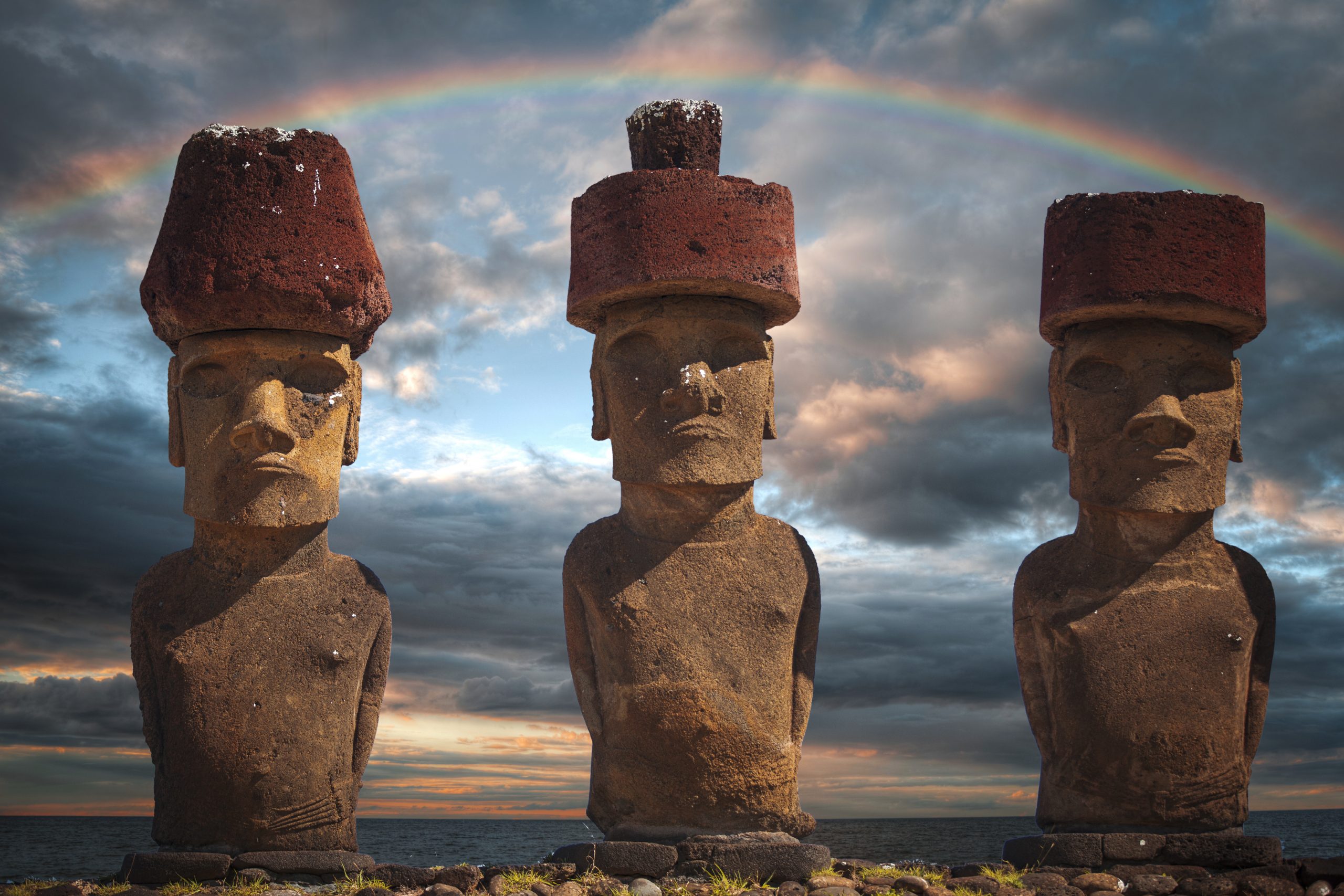
image of easter islands heads


The famous heads on Easter Island that you’re familiar with from many documentaries and feature films are actually called Moai heads or Rapa Nui heads. They were first discovered by Europeans who landed there in 1722, but their history is far older than that. 

The Moai heads are thought to date back around 1500 years to a time when the area was ruled by clans and spiritual chiefs. These heads are thought to be the stone busts of deified ancestors of the Rapa Nui people.

The main quarry for these heads is the Rano Raraku area where around half of them are still standing. The rest have been transported around Easter Island and set on stone platforms called “Ahu.” The statues have overly large heads that account for three-eights of the statue’s total size. 

These statues were first carved around 1500 years ago by Polynesian settlers who came to the Island. They are thought to represent the deceased ancestors of these people, ones who had a particular influence or significant wealth. The size of the statue on the Ahu is often indicative of this. 

For some time the movement of the statues remained a mystery. Researchers couldn’t understand how such massive structures were transported across the island by primitive people. It is now believed that wooden sledges and ropes were used which would have required 50 to 150 people. 

The statues continue to be the subject of speculation and debate as no certain answers have emerged for their purpose and symbolism. Despite this, or perhaps due to it, the statues continues to be extensively studied for answers and visited by tourists for their impressive size and beauty. 


Image – “statue on Easter Island or Rapa Nui in the southeastern Pacific” by Aliaksei, licensed for Interesting Everything by Splashlime via adobe stock. 

What You Need to Know About The Great Wall of China

Photograph of the Great Wall of China at Sunset
Great Wall of China at Sunset

Undoubtedly one of the greatest wonders of the world, The Great Wall of China is a world famous structure that winds like a dragon’s tail approximately 5,500 miles across the heart of China. It passes through a stunningly diverse range of scenery, meandering from East to West through rugged mountains, lush grasslands and desert corridors, before eventually terminating in the city of Dandong near the North Korean border. The Great Wall attracts over 10 million visitors each year, and comes entwined with a wealth of undiscovered history and tradition, much of which we will never know. If you’re considering visiting the wall or are just curious about its rich heritage, here are a few things that may interest you.

It’s over 2,000 years old

The origins of The Great Wall date back as early at the 7th Century BC, where small individual walls began to be constructed across China as individual states endeavoured to mark their territory. These individual walls were made of varying materials including earth, stone and wood, before eventually being joined together to create what we now know as The Great Wall. Many of the original structures still survive today; walk just a short stretch of the wall, and you’ll quickly discover just how varied in composition it really is.

It was originally constructed as a defence against warring states

It is thought that The Great Wall began during the Warring States Period of Ancient China, where states began to build walls as a defence against enemies invading from the North. Individual walls were constructed in the ancient states of Chu, Zhao, Qi, Yan, Wei and Qin, but when the state of Qin eventually unified China in 221BC under the Qin Dynasty, the Emperor ordered for the wall to be connected as a representation of this unity. The wall was then extended further as a defence against potential invaders, and thus, The Great Wall was formed.

It was built by convicts and thieves

When Emperor Qin demanded that The Great Wall be created, there was little doubt that he would need an extensive workforce to get the job done. But who in their right mind would put themselves forward for such a colossal task? As volunteers were found to be few and far between, Qin used the tools he had at his disposal: convicts, prisoners of war, soldiers, and forcibly recruited peasants. It is thought many escaped and fled into the Northern territories of China, and many died on the job thanks to the oppressive working conditions and lack of food.

It’s partly underwater

Believe it or not, there is a section of The Great Wall that is submerged in water. In 1981, the Chinese Government flooded an area where The Great Wall stands in Tian Jin, in an attempt to combat water shortages in the area. There is now a section that is plunged up to 35 metres deep in water which, for those who are that way inclined, can be accessed by scuba diving!

Conversely, the highest point of The Great Wall is at Heita Mountain, Beijing, where it clambers up to a staggering 5,033 feet above sea level.

It’s shrinking every day

Due to both environmental and human factors, The Great Wall is shrinking on a daily basis. Whilst natural erosion is gradually wearing away the bricks and mud that form the wall, the majority of the damage is caused by humans vandalising and even stealing parts of the wall. There are large areas of the wall that have become almost unrecognisable, particularly those located in North-western sections such as Ningxia and Gansu. Stealing isn’t clever at the best of times; particularly when you are stealing from the largest historical monument in the world!

Visiting the Great Wall

Very few people walk the entirety of the Wall, largely due to the sheer difficulty that such a challenge provides. Many of the visitors to the Wall access it directly from the main tourist hubs, usually by a coach trip or group excursion. For the more adventurous traveller, it is common to use a car to cherry-pick the greatest features along the Wall, from areas such as Honcibao and Qidun to Motianling and Huashijian. There are also helicopter excursions over the wall, but they certainly don’t come cheap. Our personal highlights include the watchtowers of Jinpai and Xusi, the wooden city gate at Deshengbao, and the huge fort at Yanmenguan Pass, the site of many battles during the Ming Dynasty. The Great Wall is as diverse as it is magnificent – enjoy your trip!

London Bridge the Thames Crossing and Arizona Curiosity

Painting - View of London Bridge by Claude de Jongh
View of London Bridge by Claude de Jongh (1605/1606–1663) – “Google Art Project” – Licensed under Public Domain via Wikimedia Commons
In 1831 a father and son team both of whom were named John Rennie constructed the original modern London Bridge. This replaced the medieval crossing that had been used for some 600 years. However, as magnificent as the bridge was, it would not be able to withstand the continuous increase of modern traffic and by 1962 the City of London made the decision to sell the famous bridge. The bridge was then replaced by the current structure spanning the Thames, opening in 1973.
Photograph of the painting "The Demolition of Old London Bridge"
“The Demolition of Old London Bridge, 1832, Guildhall Gallery, London” by Stephencdickson – Own work. Licensed under CC BY-SA 4.0 via Wikimedia Commons
Surprisingly, the 19th century bridge was sold to an individual and not a business, however the new owner Robert P McCulloch was the chairman of a extremely profitable oil production company. As well as being the founder of Lake Havasu City, Arizona, a prestige retirement complex built on the east shore of the beautiful lake. It is said that London bridge was brought and then rebuilt at Lake Havasu City with the idea that it would serve as a tourist attraction that could potentially bring buyers looking for a retirement home to the area.
Photograph of the New London Bridge crossing the Thames in the 19th century
“London Bridge by Cornell University Library – Flickr: London Bridge from the A. D. White Architectural Photographs collection, Cornell University Library, Accession Number: 15/5/3090.01026.. Licensed under Public Domain via Wikimedia Commons
Each brick used on the 1831 London bridge had to be separately removed and then shipped, a process that would have been both costly and time consuming. A year later in 1968 when the last brick had been shipped, the work to rebuild the bridge at Lake Havasu City began. The very first stone was relayed at it’s new location by Sir Gilbert Inglefield.
photograph of Tower Bridge in London, UK.
London’s Tower Bridge, often confused for London Bridge. Image adapted from the original by Francois Philipp, flickr user frans16611.
For years an urban legend has circulated that McCulloch had purchased London Bridge believing it was in fact London’s Tower Bridge, and only discovered the mistake when stonework began arriving in the United States. This however is untrue, although many people around the word still make this innocent mistake today. The reconstruction of the bridge was not done over a river or lake, but was built on dry land and later a canal was dredged and flooded under the bridge to create a large island in Lake Havasu. To rebuild London Bridge in Arizona took over three years and the project was finally finished at the end of 1971.
photograph of London Bridge in Arizona.
London Bridge Lake Havasu City in Arizona by flickr user gee01
Luckily for Robert P McCulloch his plan worked, and potential buyers started to visit the area and take interest in the new retirement properties for sale. Over the years the area has seen a sharp rise in new development, and all because of the visitors that came to see London bridge in Arizona. The story of the 1831 London Bridge is a truly amazing one, and unique in every way.

How to survive a zombie invasion

Zombie look a like, be on your guard for real Zombies, a lot of them support West Ham. Image by Flickr user rodolpho.reis
Zombie look-a-like, be on your guard for real Zombies, a lot of them support West Ham. Image by Flickr user rodolpho.reis

To survive a zombie invasion, the very first tool in your arsenal will be to think quick, very quick. Do a rapid SWOT analysis. No, that’s not a police SWAT team, but a business tool used by the suits for years. SWOT stands for Strengths, Weaknesses, Opportunities, Threats.

Let’s take your typical zombie invasion situation. You came home with you’re best and only mate last night, slightly pissed from 8 or 9 pints, and you wake up on the sofa (couch for the yanks). Why you couldn’t have gone to bed and tided up the rubbish heap of a living room you have now become semi-conscious in who knows. We digress, your in your abode; you’re only wearing your underwear, a bad hangover, vindaloo breath, and those crappy little eye masks you get in economy on a transatlantic flight.

You hear pandemonium from the street outside. You pull back the curtain; it’s yellow and pointless. All you can see outside is death, murder, kill amongst random people, some of your neighbours, and the nutty bag lady that patrols the neighbourhood. Your neighbours who have all aged, rotted and dressed surprisingly smarter over night, all be it disheveled by pinking shears, dirt and channel 4, are all now closing in on you.

Now lets analysis this situation:

SWOT Strengths

  1. This is a new situation as you have not been invaded by zombies before, and it suits your ADHD need for continual new input from your environment.
  2. You’re not alone; that would be scary.
  3. Your in your own theatre of operations, it’s your turf and you know where everything is. Except the TV remote, that could be sinister, but as we are focusing on strengths that’s not a concern right now.
  4. Surprisingly, considering the amount you drink, your fit for a suburban coach potato, and your mate is really fat. Benefit here! He can take the flack if it gets sticky as you can run faster. Probably best not to mention this in the briefing your about to have when you find which non-bedroom utility room he has collapsed in.

SWOT Weaknesses

  1. Confrontation is not your thing, hence no girlfriend, or boyfriend for that matter. Zombie invasions involve a lot of confrontations; you’re going to need to man up and fast, or at least after you finish the stale onion bhaji.
  2. You have no weapons of mass destruction; they never existed except in Tony Blair’s mind, but who’s focusing on reality right now.
  3. You’re surrounded by Zombies, and the TV is stuck on Daytime. Harry Carry is not an option; your mother is coming for tea.
  4. Your boss will not except another, “There were leaves on the line, and no spaces left on the busses!” excuse for being late as you stupidly used them all up in the summer. Bad Timing!

Tony Blair speaking at the International Zombie Convention - Image adapted from Flickr user World Economic Forum under creative conman’s licence
Tony Blair speaking at the International Zombie Convention – Image adapted from Flickr user World Economic Forum under creative conman’s licence

SWOT Opportunities

  1. This could be the time to get a lot of people off you’re back. Just invite them round and use their bodies as cannon fodder for the zombies that are now trying to figure out how to get through your garden gate. This is because you have been standing in the window naked drawing a lot of attention whilst you thought about Strengths, Weaknesses and having a piss.
  2. There are no zombies in the back garden that leads to the garage and an alleyway. There’s a scooter with sidecar in the garage that’s been there since 1942 when your granddad brought the house that surprisingly your parents let you live in while they moved to Scotland. Shame you live in Carlisle, as that gives them an excuse to come around all the time, but we digress again.
  3. You have tickets to see the Grateful Dead at Wembley, surely the Zombies could be bribed with them. Slight downside, the tickets, were your parents, and the stub is missing, not to mention that Jerry Garcia is, well dead! Sill since these Zombies look a bit dim, they might fall for it.
  4. It’s a work day, and the end of the world. You can call your boss and tell him he is a complete and utter Wan@£$@$@ because he’ll probably be dead by dinnertime and there won’t be a job to go back to anyway. If you’re stuck on overcrowded public transport reading this on the way to work and there has not been a Zombie invasion, hard luck old boy, but keep your chin up, there might be a zombie invasion tomorrow and at least by reading this post you will be prepared. Well maybe prepared, but probably when you get home tonight and veg out you’l forget all about our little chat today and then it will be too late. Stick a note with bullet points on the fridge when you get home, that will help!


SWOT Threats

  1. Zombies, lots of bloody Zombies, and they haven’t brushed their teeth. The atmosphere smells like that time you woke up on top of a mirror and tried to snog yourself with kebab breath! No? Just me then.
  2. You’re naked, and all this Zombie related stuff has given you brewers droop. Your open for ridicule by Zombie, Not good! Also, you seem to have forgotten that your wearing underpants. Paranoid or what!
  3. Your best mate is incredibly clumsy and on a good day is a health hazard, the stress of all these zombies is going to make that worse, a lot worse.
  4. The usual routine of going to the off licence, if you still have one of those in your town, has been disrupted a bit and you may have to face the day without a hair of the dog.
  5. Your parents are coming round for tea, this is probably on par with the Zombie threat.

Time for a plan

OK, so SWOT done, time to either Plan or Panic. Personally I’m a big fan of panicking, you forget you have a hangover, it uses up a lot of calories, let’s face it you drink a lot. You must be practicing this panicking thing as you’re hallucinating there’s Zombies about and your standing naked in the window. Plus you have yellow curtains. Panicking is looking pretty good right now.

There is strength in numbers, go wake up the best mate!

Two is always better than 1, not just because it’s a bigger number, but because there are generally more things you can do with the number 2. Shit as he may be, he is your best mate, and as it turns out is a big fan of Zombie movies. Turns out you are also a big fan too, all be it by proxy. It’s just that your ADHD, vindaloo eating, beer drinking, and sofa potatoing has conditioned your brain to ignore your surroundings so that you forgot all the DVDs you have watched have turned you into an urban expert on the marauding creatures outside.

The Plan

  1. You need to get dressed – It’s cold outside, and we have already covered the embarrassing bit you were getting paranoid about a few minutes ago, yer, it takes a long time to reach self actualisation when you get up from the couch!
  2. You need to get from the living room to the garage, the Zombies are now laughing at your manhood. This has yielded a small bonus as they’re distracted from going through the front door, which as per usual after a night out you have left wide open.
  3. From the garage you need to ignore the old scooter and sidecar, as 1 you don’t know how to ride a scooter, your not a mod, and 2 your mate is too fat to get in the sidecar.
  4. You need to brainstorm all you know about how to kill zombies with your mate. Your mate is called Dave by the way. He was named after the TV channel. It’s like the whole Westward Ho! book thing. Google it!
  5. Using the brainstorming results you and Dave came up with, gather up as many utilitarian household items that you have identified as Zombie ending real world apps as possible and make your get away. P.S. you have a garage, it’s a safe bet there’s a bunch of uncharged power tools that only ever came out the box once lying about collecting dust. These may not help, but we are working on your manhood here. Anything will do, you’re not Bruce Willis yet!
  6. Stop off at Waitrose to stock up on food, yes Waitrose, with the middle classes all riding the latest Hoxtonian Zombie tribe thing to show they have meaning, the staff will be reducing all the really expensive items to next to nothing as they have no customers, and there high staff to punter ratio needs to be maintained for their jobs and yearly bonus. Yanks and Canucks take note, Waitrose is one of those supermarkets people with too much disposable income like to be seen in, but don’t like it when they bring out a basic’s range that means their cleaner also shops there. Obviously you Antipedeans don’t need an explanation as you’re all over here on working holidays anyways.

As you make your getaway, killing all your neighbours and avoiding the bag lady, she is good for the closing anecdote, make sure to note how luckily you are to be living in a world where you can keep your SAS survival handbook downloaded on your iPhone.


Everything you ever wanted to know about the River Danube

The River Danube is undoubtedly one of the most famous stretches of water in the entire world. For centuries, people of all cultures have marveled at the sheer size and strength of this European tributary, and indeed, much tourism has occurred because of it. This is why I’m taking the time out today to write a short article detailing some of the most interesting facts about the river and the locations it runs through – hopefully you’ll find the information as compelling as I do.

River Danube
River Danube – Adapted for the original work by Flickr user lyng883

Second Largest River In Europe

Starting as many smaller streams in the Black Forest of Germany, this waterway soon becomes one before flowing through no less than four different major capital cities and eventually emptying into the vast openness of the Black Sea. It’s total length is somewhere around 2800 km, which is beaten only by the Volga in Russia.

Flows Through The Borders Of 10 Countries

Though the river only actually reaches 4 major capital cities, at one point or another it travels through 10 European countries. These are Germany, Slovakia, Austria, Serbia, Hungary, Croatia, Moldova, Bulgaria, Romania, and Ukraine. The capitals reached are Budapest, Vienna, Belgrade and Bratislava.

Provides Drinking Water To Millions

Yes, that’s right, over 10,000,000 people living in the European countries surrounding the Danube get their drinking water directly from the river. Obviously this is cleaned before being pumped through pipes and into the homes of the general population, but still, providing for that many people is startlingly impressive.

Home Of River Cruises For Over 100 Years

Starting in the 19th century, river cruises along the Danube have been incredibly popular with tourists wanting to experience the true atmosphere of European culture. These days, anyone wishing to take a short break and visit some of the most extraordinary sights can do so for very little cost (I’m sure you’ve all seen the adverts on TV)

Gave Hungary’s Capital City Its Nickname

Although the river cuts through 10 different countries, around ⅓ of it is contained within Hungary, which is why many people refer to the capital city of Budapest as the Queen of the Danube. Here you’ll find stunning architecture, all within a naked-eye view of the waterway.

Has The Largest Delta In The World

The area where the Danube flows into the sea (the delta) is accepted as being the largest on earth, and many experts claim it’s actually still growing. Best estimates suggest this area currently supports over 5500 different species of wildlife, which is why animal and plant enthusiasts come from all corners of the globe to witness the untouched reserve.

Home Of The Longest Bike Trail In Europe

People who enjoy cycling will be glad to know the river actually has a track running along the vast majority of its length, meaning anyone is free to travel the distance at their own leisure. Also, there are many different camp sites along the route so anyone with the inclination could take a very cheap holiday if they were willing to compromise on luxuries and move via pedal power.

So there you have it, that was everything you need to know about one of the most awe-inspiring rivers on the planet. Now all you need to decide is when you’re going to check it out for yourself.

Have a fabulous time!


Everything you need to know about the Vasari Corridor

If you haven’t heard of the mysterious Vasari Corridor; it’s one of the most interesting and exciting places in all of Florence. It’s actually a secret passageway that isn’t so secret anymore; 1km long, elevated, and enclosed. It connects the Palazzo Vecchio and Palazzo Pitti, crossing over Florence’s river Arno. Interested? Read on for everything you need to know about the curious Vasari Corridor:

vasari-corridor
The Vasari Corridor crossing the river Arno in Florence – Image by Flickr user collectmoments

The corridor was built by a man called Giorgio Vasari, who was an architect for the court of the Medici family. Around the same time, the Medici family had just purchased a large villa on the bank of the Arno river (Pitti Palace), while enjoying the title of the Dukes of Florence. This family lived in the Pitti Palace, while their “office” if you will, was the Palazzo Vecchio. The family’s wish was to move between their house and “office” without facing any dangers, and free to look upon their subjects without being spotted. If you would like to learn more about the Medici family, a book called The Rise and Fall of the House of the Medici by Christopher Hibbert is highly recommended.

Taking just 5 months to build in 1565, the Vasari Corridor was ready just in time for the wedding of the son of the Duke Cosimo I de’ Medici and Joanna of Austria. To walk through the Vasari Corridor, you’d pass through the halls of the Uffizi gallery, cut through the Arno river, pass over the goldsmith’s shop located on Ponte Vecchio, cross the gardens of Palazzo Guicciardini, and then make your way out at the Boboli gardens.

The Vasari Corridor was even featured in Dan Brown’s hit novel Inferno; used by a professor and a Dr to escape soldiers. Nowadays, you can take tours yourself through this mystical corridor, a definite must if you’re visiting Florence! You can see unique portraits inside the corridor which actually seem to give you a little peek into the minds of the artists. Eerily quiet inside the corridor, it’s comparable to Dr Who’s Tardis; much bigger on the inside than you would expect. Straight off, you’ll notice other pieces of Florence’s history, such as the artwork damaged by the mafia bomb set off under the gallery in 1993. The bomb killed 5 people, and the damaged works of art were later pieced back together to serve as a reminder to visitors. You should take your camera with you to get some memorable shots, however, you can’t take pictures of the artwork from inside the corridor – only from outside of the windows.

You’ll end your tour in the Palazzo Pitti’s garden, located next to something called the “Grotto of Moses”, where in the summer various jazz shows are held. This is a beautiful and perfect place to finish your tour; you might even feel like a Medici for a minute!

The Vasari Corridor is a truly unique place and a great experience to get under your belt – it’s highly recommended that you add a visit to your bucket list of things to do!